Your Pool Is Cloudy Because You Are Treating the Symptom, Not the Cause
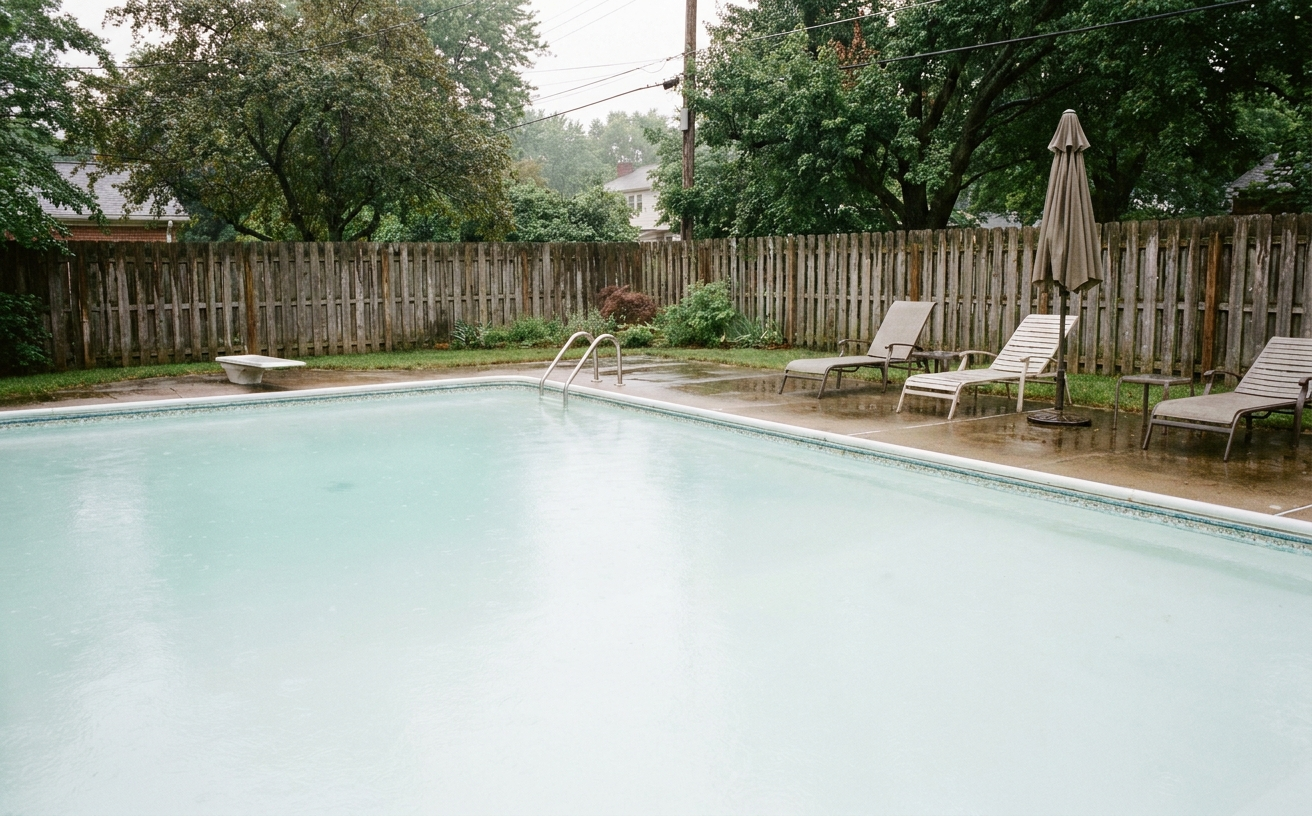
The instinct when a pool turns cloudy is to add more chlorine. Sometimes that works temporarily. More often, the cloudiness returns within a day or two because the underlying cause was never addressed. Chlorine kills bacteria and oxidizes contaminants, but it does not fix the conditions that made the water cloudy in the first place.
Cloudy water is a symptom with at least five distinct causes. Adding chlorine without identifying which cause is at work is like taking painkillers for a toothache without finding the cavity. The relief is temporary and the problem keeps getting worse.
Cause One: Dead Algae After Treatment
The most common scenario is a pool that had an algae bloom, was treated with shock, and turned cloudy afterward. The chlorine killed the algae, but the dead algae particles are still suspended in the water. They are too small for the filter to catch quickly and too light to settle to the floor overnight.
In this case, the water is actually on its way to being clean. The cloudiness is residual dead organic matter that will eventually clear through filtration. The mistake is shocking again, which adds more chlorine to water that is already chlorine-heavy and does nothing to speed up particle removal.
The correct response is to run the filter continuously, add a clarifier to clump the fine particles into larger ones the filter can trap, and clean or backwash the filter as needed. This process takes two to four days but it resolves the root cause rather than masking it.
Cause Two: Inadequate Filtration
A filter that is undersized, clogged, or running too few hours per day cannot remove the fine particles that cause cloudiness. The water tests fine for chlorine and pH, but it never quite clears because the physical removal mechanism is insufficient.
Cartridge filters are the most common culprit. A cartridge that looks clean to the eye may be loaded with fine particles that reduce flow without obvious visual signs. If your cartridge is more than a year old and the pool is chronically hazy, the filter may need replacement rather than cleaning.
Sand filters can also lose efficiency over time as the sand channels develop pathways that let water bypass the filtering media. Replacing the sand every three to five years restores filter performance and often resolves persistent cloudiness that chemicals alone cannot fix.
Cause Three: High Calcium Hardness
In areas with hard water, calcium can precipitate out of solution and create a persistent milky haze that no amount of chlorine or filtration will remove. The water looks cloudy but the particles are dissolved minerals, not organic matter. Anyone trying to clear cloudy pool water that does not respond to shock or clarifier should test calcium hardness before adding more chemicals.
High calcium levels combined with high pH or high temperature cause calcium to come out of solution. You see this as scaling on the tile line, rough surfaces on the walls, and a general milky quality to the water that does not respond to normal clarifiers.
Testing calcium hardness reveals the problem immediately. Levels above four hundred parts per million are prone to precipitation, especially when pH drifts above 7.8. The fix involves lowering pH to the 7.2 to 7.4 range and maintaining it there consistently. In severe cases, partial drainage and refilling with softer water is necessary.
Cause Four: Early Algae Bloom
Sometimes cloudy water is not dead algae. It is live algae in the early stages of a bloom, before the water turns visibly green. The algae cells are suspended throughout the water column, creating a hazy appearance that looks like a filtration problem but is actually a sanitation problem.
The giveaway is chlorine demand. If you test the water and free chlorine is near zero despite recent additions, something is consuming it. That something is usually algae. The cloudiness is the visible evidence of an active biological process, not leftover debris from a past event.
In this case, shock is the correct response, but it needs to be aggressive enough to kill the entire bloom. A partial dose may weaken the algae without eliminating it, leading to a cycle of recurring cloudiness that never fully clears.
Cause Five: Contaminant Overload
After heavy use, a pool can turn cloudy from the sheer volume of organic waste introduced by swimmers. Sunscreen, sweat, cosmetics, and body oils combine with chlorine to form chloramines, which reduce free chlorine and create both cloudiness and the sharp chemical smell that people associate with over-chlorination.
This type of cloudiness resolves with a shock treatment followed by continuous filtration. The key is shocking to break down the chloramines and restore free chlorine, then filtering to remove the oxidized byproducts. If free chlorine has returned to normal and the water is clearing the next morning, the treatment worked.
The Diagnostic Approach
Instead of reaching for chlorine every time the water looks off, run a simple diagnostic sequence that identifies the cause before you treat it.
- Test free chlorine, pH, and calcium hardness
- Check filter pressure and clean or backwash if elevated
- Run the filter for twenty-four hours continuously
- If cloudiness persists after filtration, add clarifier for dead algae or shock for live algae based on your chlorine test results
- If calcium hardness is high, adjust pH and consider partial drainage
This five-step sequence resolves over ninety percent of cloudy water events without guesswork or unnecessary chemical additions. The remaining cases usually involve equipment problems that require professional diagnosis, not more chlorine.
Cloudy water is your pool telling you something specific is wrong. Listen to the message instead of muffling it with chemicals, and the problem stays solved instead of recurring.